Dream Lives Series
The Dream That Created Frankenstein
Dream Lives Series
The Dream That Created Frankenstein
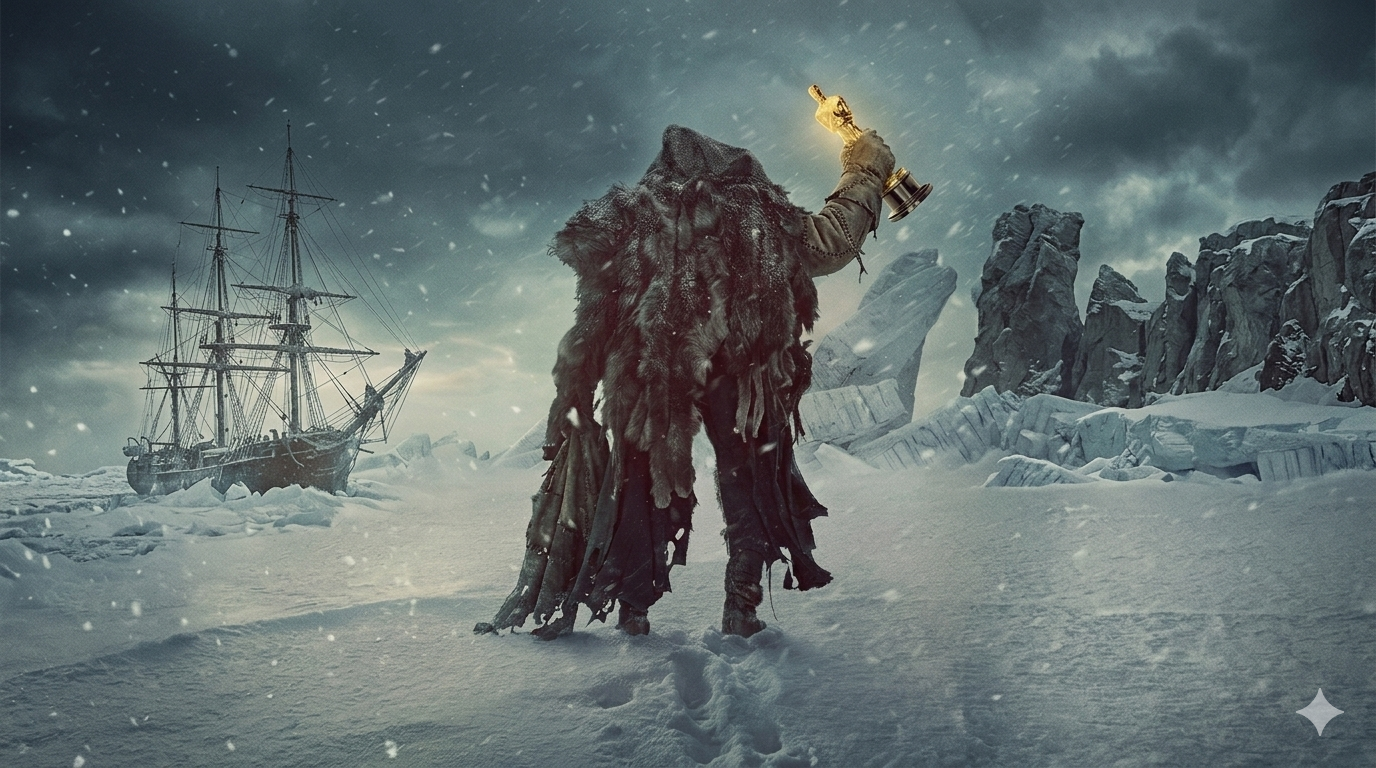
Guillermo del Toro's Frankenstein, produced by Netflix, won three Oscars last night.
The monster that has haunted the world for two centuries dressed up, walked the red carpet, and took home three golden statuettes.
What almost no one mentioned in the coverage… it all started with a dream.
Not like a metaphor for a dream. An actual dream. A sleep-wake vision at two in the morning, in a room by Lake Geneva, Switzerland, experienced by an eighteen-year-old girl who had already lost more than most people lose in a lifetime.
The creature didn't come from a laboratory. It came from her nightmind.
And once you understand what she was carrying when she dreamed it, you'll never experience this story the same way again.
The Night the Monster Was Born
It is past midnight on June 16, 1816.
Summer has been wrong from the start. An eruption of a volcanic mountain in Indonesia the previous April threw so much ash into the atmosphere that European skies have completely darkened. Remember spring of 2010, when an Icelandic volcano with an unpronounceable name shut down European airspace for two weeks? Imagine that, but across the entire continent, for an entire summer, with no forecasts, no science, and no end in sight. Crops are failing. Some days require candlelight at midday. It rains constantly, violently, theatrically, trapping everyone indoors. This will later be called the Year Without a Summer.
Mary Godwin is eighteen years old. She is sitting in Villa Diodati, Lord Byron's rented estate on the southern shore of Lake Geneva, listening to two men argue about the dead.
Lord Byron and Percy Bysshe Shelley, the most celebrated poets of their generation, are debating whether electricity could reanimate a corpse. Whether science might one day reassemble a human being from parts and breathe life back into it. They call it galvanism.
They are drunk on the idea. Byron has been reading aloud from Fantasmagoriana, a French anthology of ghost stories. The conversation has turned to something more serious: the principle of life. Could it be manufactured? Could dead tissue, shocked with electrical current, stir back into being? And… should it?
Galvanism today is just called science. Defibrillators, ICU ventilators, even AI reconstructing our voices and faces to create content long after we're gone. Byron and Percy weren't being dramatic. They were just two hundred years early.
Mary listens. She doesn't speak. She is eighteen, a woman, uncredentialed, in a room where the ideas belong to someone else. She is, in her own words, "a devout but nearly silent listener."
Eventually, she goes to bed.
The Hypnagogic Vision
What happens next is something she will spend fifteen years trying to find words for. Her imagination, she writes, "unbidden, possessed and guided me, gifting the successive images that arose in my mind with a vividness far beyond the usual bounds of reverie." She is neither fully asleep nor quite awake. Scientists call this the hypnagogic state, that charged threshold between waking and sleep where the brain's editor goes offline but its storytelling engine runs hot.
And what takes over shows her this: a pale student kneeling on the floor beside something he has built. A figure, massive, assembled from pieces, stretched out and motionless. Then, slowly, on the working of some powerful engine: movement. An uneasy, half-vital stirring.
The student is horrified by what he's made. He falls asleep, hoping the thing will simply stop. But he is awakened. And there is the creature, standing at his bedside, looking at him with yellow, watery, but "speculative" eyes.
Mary opens her own eyes in terror. And then: "Swift as light and as cheering was the idea that broke in upon me."
I have found it. What terrified me will terrify others. I need only describe the specter which has haunted my midnight pillow.
The next morning, she tells the group she has thought of a story. She begins writing that same day.
What Mary Shelley Carried Into That Room
She was born on August 30, 1797. Her mother, the feminist philosopher Mary Wollstonecraft, author of A Vindication of the Rights of Woman, died eleven days later from complications of childbirth. Making Mary, from the very first moment of her life, a creature whose creation killed its creator.
At sixteen she ran off with the married Percy Bysshe Shelley, which disconnected her completely from her father. At seventeen, she gave birth prematurely to a daughter who died days later.
She had a healthy son by January 1816. That summer, Byron challenged the group to each write a ghost story. A parlor game among geniuses, on a series of stormy nights in Switzerland. And there sat Mary, listening to men debate the reanimation of the dead, carrying a private archive of loss that none of them would have noticed.
The 1818 first edition of Frankenstein was published anonymously, with a preface written by Percy. Many assumed he wrote it. The woman who had sat silent at that table had created one of the most enduring myths in literary history, and her name didn't appear on the cover for five more years.
Two Dreams, One Grief
Mary had lost a daughter in February 1815. Twelve days old. And on March 19th, she wrote in her journal: "Dreamt that my little baby came to life again; that it had only been cold, and that we rubbed it before the fire, and it lived. Awake and find no baby. I think about the little thing all day. Not in good spirits."
Research shows most bereaved people dream of the deceased — the nightmind returning again and again to unfinished emotional business, searching for a way through. Mary's 1815 journal entry is the most famous version of the most common dream the grieving mind produces.
But the wish didn't resolve anything. The grief stayed open. And fifteen months later, something shifted.
The men at the table had provided new material — galvanism, electricity, the assembled creature — and the nightmind recognized the vehicle it had been waiting for. This time it didn't try the hopeful version. It went deeper. It asked the question underneath the wish:
You wanted her back. But what if it actually worked? What if the thing you tried to warm back to life opened its eyes and looked at you?
And the answer it returned was a pale student, recoiling from what he made. Falling asleep and hoping the problem dies on its own. Waking to find it standing at his bedside.
Inside the novel, Victor Frankenstein has a nightmare the night after he creates the creature. He dreams he embraces Elizabeth in the street, and as he kisses her, she transforms into the corpse of his dead mother in his arms. "A shroud enveloped her form, and I saw the grave-worms crawling in the folds of the flannel."
Where Mary dreamed of warming her dead daughter back to life, Victor embraces the living and watches them become the dead. Same grief. Same circuit. Just running in the other direction.
The novel is not a science fiction story wearing a Gothic costume. It is a grief dream wearing a dead woman's name.
Why the Monster Never Dies
Guillermo del Toro has said that when he first saw Boris Karloff as the creature on screen as a child, he finally understood what a saint looked like. Oscar Isaac read the first thirty pages of del Toro's script on a hotel room floor, tears streaming down his face.
Because the creature in Frankenstein is not the villain of the story. He is its most human character. He wants what every abandoned thing wants: to be seen, to be claimed, to have the person who made him be able to look at him without flinching.
We have all made something we couldn't look at. A version of ourselves assembled in desperation and then recoiled from. A relationship built from grief that couldn't bear its own life once it arrived. Something we brought into existence and then stood at a distance from, hoping it would either validate us completely or quietly disappear.
The monster doesn't disappear. That's the whole point of the story. It follows you to the ends of the earth. It outlives you. It stands at the bedside of everyone who looks away.
Two hundred years later, del Toro built real sets, no green screen, no digital shortcuts, twenty sculptors working at any given moment, a full-scale ship mounted on a gimbal. He made it by hand, from parts. The way Mary made hers.
And on March 16, 2026, the dream that started in a hypnagogic vision on the shore of Lake Geneva walked into the Dolby Theatre and won three Oscars.
Mary Shelley didn't create the monster. She acknowledged it, engaged with it. She survived it.
And lived to tell the story.
Sansan Fibri is the founder of Wakefully, a subconscious intelligence platform.